
Alright, let’s grab a virtual coffee and talk about something that’s quietly but powerfully reshaping the financial landscape. You’ve heard the headlines, right? ” Software selloff is disrupting some M&A and IPO deals , US bankers say.” Sounds straightforward enough, a bit dry perhaps. But here’s the thing: it’s way more than just a disruption. It’s a seismic shift, a re-calibration that’s sending ripples through every corner of the dealmaking world, from Silicon Valley startups to the hallowed halls of Wall Street.
My goal today isn’t just to repeat the news. It’s to peel back the layers, to explore the why behind this particular financial earthquake. What are the unspoken anxieties? What are the strategic pivots happening behind closed doors? And perhaps most importantly, what does this mean for the future of innovation and capital markets? Because, let me tell you, the story US bankers are whispering is far more nuanced and fascinating than a simple market correction.
I initially thought this was just about rising interest rates, but then I realized it’s a confluence of factors, a perfect storm brewing for a while. We’re going to unpack the hidden context, the critical implications, and frankly, what you should be paying attention to in this evolving economic narrative. It’s not just about big banks and tech giants; it’s about the very engine of growth in our economy. So, let’s dive in.
The Great Re-evaluation | Why Software’s Shine is Dimming for Dealmakers
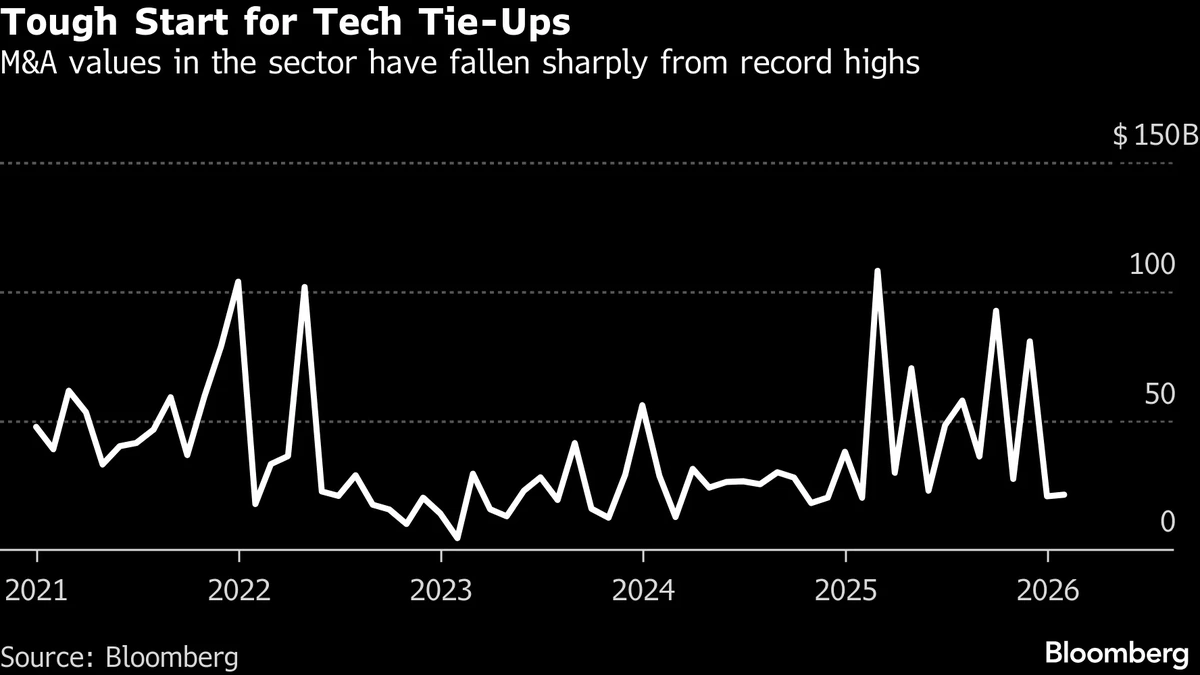
For years, software was king. And rightly so, in many respects. Innovative, scalable, often high-margin it commanded premium tech valuations that seemed to defy gravity. Think about it: a company could be barely profitable, yet fetch billions based on its user growth or disruptive potential. Those days, my friends, are largely in the rearview mirror. What we’re witnessing now is a harsh, but perhaps necessary, reality check.
So, why the sudden chill? Well, it’s a cocktail of causes, but the most potent ingredient is undoubtedly the rapid series of interest rate hikes by the Federal Reserve. When money was cheap, investors were happy to bet on long-term growth stories, knowing the cost of capital was low. Now, with borrowing costs significantly higher, that calculus has completely flipped. Future earnings are discounted more steeply, making those sky-high growth multiples look… well, a little less stellar. Investors want to see profitability, and they want to see it now.
This shift isn’t just about the cost of borrowing; it’s about a broader economic uncertainty that has gripped the market. Geopolitical tensions, persistent inflation, and recession fears have made everyone, from institutional investors to individual consumers, a little more cautious. When the economic outlook is foggy, assets perceived as higher risk like early-stage software companies with unproven profitability models are the first to feel the pinch. This, in turn, directly impacts the appetite for audacious M&A and speculative IPOs.
M&A Slowdown & IPO Freeze | The Rippling Effect Across Private Equity
If software valuations are deflating, then it’s only logical that the entire dealmaking environment takes a hit. We’re certainly seeing a palpable M&A slowdown. Acquirers, especially those relying on debt financing (which is most of them), are facing significantly higher costs. The hurdle rate for making a deal pencil out has climbed, meaning only the most strategic, immediately accretive acquisitions are getting done. Gone are the days of acquiring companies just to stack growth for growth’s sake.
And then there are IPOs or, rather, the lack thereof. The public market, as reflected by the major indices, has become far less forgiving. Where once a software company could debut with great fanfare and a lofty valuation based on potential, today’s public market sentiment demands a clear path to profitability and a robust business model. This has created an effective “IPO freeze” for many tech firms that might have otherwise gone public. The window for a successful public offering is barely a crack, and only the most mature, profitable companies dare attempt it.
This dynamic has massive implications for private equity deals. PE firms, often sitting on vast amounts of capital, thrive on buying companies, optimizing them, and then selling them (or taking them public) for a profit. But if the exit environment is challenging meaning it’s hard to sell a company for a good price or take it public then the entire PE model faces pressure. They’re becoming more selective, holding assets longer, and demanding more attractive entry valuations. It’s a fundamental re-evaluation of risk and reward, changing the playbook for both buyers and sellers. Speaking of how these macro trends affect different sectors, it’s worth noting similar discussions are happening aroundsoftware and AI borrowing costs, which are also under intense scrutiny right now.
Venture Capital’s New Reality | Down Rounds and the Hunt for Profitability
Now, let’s talk about the upstream impact: venture capital funding. VC is the lifeblood of the software industry, fueling innovation from seed stage to growth. For years, the mantra was “grow at all costs,” with VCs often encouraging companies to prioritize user acquisition and market share over immediate profitability, assuming a larger valuation down the road. The current market has mercilessly dismantled that paradigm.
What we’re seeing now are “down rounds” companies raising money at a lower valuation than their previous round. This was once a scarlet letter for startups, but it’s becoming increasingly common. VCs are demanding clearer paths to revenue, stronger unit economics, and, you guessed it, profitability. The pressure on founders is immense, requiring them to make tough decisions about scaling back, extending runway, and fundamentally re-thinking their business models.
This shift in venture capital isn’t just about tighter purse strings; it’s about a complete re-education. VCs, who themselves often rely on the M&A and IPO markets for their own fund returns, are now pushing their portfolio companies to be more fiscally disciplined from day one. It means fewer “unicorns” might emerge, but perhaps a stronger, more resilient cohort of companies will survive. As a veteran in this space recently told me, “It’s not about how fast you grow, but how sustainably you grow now.”
Navigating the Choppy Waters | What Bankers Are Really Telling Clients
So, what are the US bankers the ones on the front lines of these deals really saying to their clients? It’s not all doom and gloom, but it’s certainly a dose of tough love. They’re emphasizing resilience, strategic fit, and, above all, realistic valuations. The “growth at any cost” mentality is out; “smart, profitable growth” is in.
For sellers, the message is clear: be prepared for a longer, more arduous sales process and adjust your expectations on price. Bankers are advising clients to demonstrate strong fundamentals, clear customer value, and a defensible market position. They’re also encouraging businesses to explore alternatives to a full sale, like minority investments or strategic partnerships, if a complete exit isn’t yielding the desired valuation. You can find more detailed analyses of current market conditions and advice for businesses on major financial news outlets likeThe Wall Street Journal, which often covers these trends extensively.
For buyers, the advice is to be opportunistic but disciplined. There are deals to be had, particularly for well-capitalized firms looking to acquire strategic assets at more reasonable prices. But due diligence is more critical than ever, with bankers scrutinizing every line of a company’s financial statements and growth projections. The focus isn’t just on what a company could be, but what it is right now. This means a return to fundamental analysis, a concept that sometimes felt quaint during the exuberance of the past decade.
The Road Ahead | When Will the Dealmaking Window Reopen?
Ah, the million-dollar question: when will things return to “normal”? The truth is, that’s incredibly difficult to predict, and frankly, what is normal anymore? Most analysts and US bankers I’ve spoken with don’t anticipate a quick snap-back to the frothy markets of 2021. Instead, they expect a more gradual, uneven recovery.
The software selloff has initiated a fundamental shift in how value is perceived and how deals are structured. We’re likely heading into a period where M&A activity will be more strategic, IPOs will be rarer and reserved for truly exceptional companies, and capital will be allocated with greater discipline. This isn’t necessarily a bad thing. It could lead to a healthier, more sustainable tech ecosystem, where companies are built on solid foundations rather than speculative hype.
Keep an eye on inflation data, Federal Reserve policy, and overall economic uncertainty. These macro factors will be the primary drivers of when the dealmaking environment truly reopens. Until then, expect a grind, a focus on fundamentals, and a market that continues to demand profitability over sheer potential. It’s a challenging time, no doubt, but also a time ripe with opportunity for those who understand the new rules of engagement. For a broader perspective on economic forecasts and market sentiments influencing these windows, authoritative sources likeInvestopediaoffer valuable insights and analysis.
Frequently Asked Questions About the Software Selloff and Deal Disruptions
What does “software selloff” actually mean for the average investor?
For the average investor, a software selloff means that the stock prices of many software and technology companies have significantly declined from their peaks. This can affect your investment portfolio if you hold tech stocks or tech-focused funds. It also signals a broader shift in investor sentiment, where growth potential is now being balanced more critically with current profitability and cash flow. It’s part of a larger economic picture, much like how factors are affectingUS mortgage rates.
Why are M&A and IPO deals being disrupted specifically by the software selloff?
The disruption stems from the fact that software companies, which were previously valued very highly, are now seen as less attractive investments due to various factors like rising interest rates and increased demand for profitability. This lowers their potential acquisition price (affecting M&A) and makes it harder for them to go public at desirable valuations (freezing IPOs).
Are all software companies equally affected by this disruption?
No, not all software companies are equally affected. Companies with strong balance sheets, consistent profitability, and critical market positions tend to fare better. Highly speculative startups or those with uncertain paths to profitability are feeling the most significant pressure.
How long do US bankers expect this M&A slowdown to last?
Most US bankers anticipate that the current M&A slowdown will persist for some time. While a quick rebound is unlikely, the market is expected to gradually adjust. The timing of a full recovery depends heavily on macroeconomic factors like inflation, interest rate policies, and geopolitical stability, which are constantly evolving.
What are “down rounds” in venture capital, and why are they happening now?
A “down round” occurs when a private company raises new capital at a lower valuation than its previous funding round. They’re happening now because the broader market selloff and increased demand for profitability from investors are forcing private companies to accept lower valuations to secure much-needed capital.


