
Okay, let’s grab a coffee and talk about something genuinely interesting, something that really got my attention recently: the idea of the government, specifically former President Trump, potentially giving workers $1,000 for retirement . It sounds fantastic on the surface, doesn’t it? A thousand bucks, just like that, dropped into your retirement account. Who wouldn’t want that? But here’s the thing, as an analyst, my brain immediately goes to the ‘why’ and the ‘how’. It’s easy to get swept up in the headline, but what are the deeper questions we should be asking? Can it actually work? What are the ripple effects? Let’s unpack this, because it’s not just about a thousand dollars; it’s about the future of worker financial security in America.
The Allure of a Grand Gesture | What’s the Proposal Exactly?
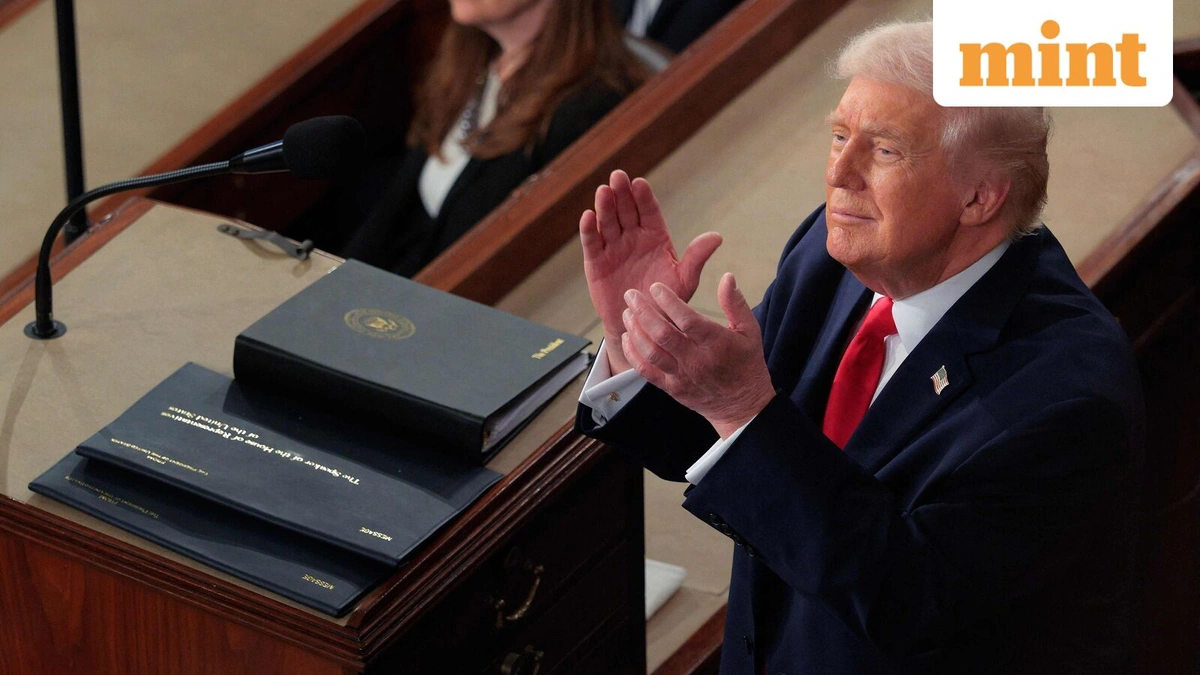
So, the gist is this: a proposal to provide a direct $1,000 contribution to American workers’ retirement accounts. Think of it as a little top-up, a nudge, maybe even a mini- economic stimulus for your golden years. This isn’t just a random thought; it’s being framed within a broader conversation about how many Americans are woefully unprepared for retirement. The numbers are often stark, showing a significant retirement savings gap across various demographics. For millions, retirement planning feels like a luxury, not a necessity they can afford. A thousand dollars, in this context, aims to be a tangible step toward addressing that. It’s an idea designed to put more money into long-term savings, potentially encouraging a habit of investing, or at least giving a boost to those who are struggling to get started. What’s fascinating to me is how such a seemingly simple proposal can open up so many complex layers of economic and social debate. It’s a bold move, no doubt, but as with all bold moves, the devil is in the details.
Beyond the Headlines | The Economic Realities and “Why” It Matters
Now, let’s put on our analyst hats. A $1,000 retirement bonus , if implemented broadly, could represent a massive federal outlay. We’re talking billions, potentially even trillions, depending on the scope and duration. So, the first ‘why’ that comes to mind is: why this amount, and why now? Is it about addressing immediate cost-of-living concerns, or is it genuinely a strategic play for long-term retirement security? The impact on the national budget would be immense, and it raises immediate questions about funding sources: taxes, borrowing, or reallocating existing funds. Then there’s the individual impact. For someone with zero retirement savings, a thousand dollars is a start. A small, but important start. For someone with a robust 401(k) or individual retirement accounts (IRAs) , it might feel more like a nice little bonus. But is it enough to truly close the retirement savings gap that plagues so many households?
Economically speaking, injecting capital into retirement accounts is different from direct consumer spending stimulus. It’s less likely to immediately fuel inflation in the same way, as the money is theoretically locked away for decades. However, the sheer scale of such a program could have broader macroeconomic implications, influencing capital markets and the long-term debt trajectory. We also need to consider the behavioral aspect. Would this incentivize people to save more, or would it be seen as a one-off and not fundamentally change saving habits? This kind of federal retirement initiative isn’t just about the money; it’s about the message it sends about responsibility and government’s role in personal finance. For more insights on financial strategies, I often find myself browsing resources like Groow Finance News to stay informed on these kinds of shifts.
The Policy Minefield | Can It Really Work?
Alright, so we’ve established the ‘why’ it matters, but now for the really thorny part: can it actually work? The policy feasibility of a proposal like this is incredibly complex. First, eligibility. Who gets it? Is it every working American? Only those below a certain income threshold? Does it apply to part-time workers, gig workers, the self-employed? Each decision introduces administrative hurdles and potential equity issues. Then there’s the mechanism. How does the government identify eligible individuals and ensure the money lands in the correct retirement vehicle? Are we talking about creating new government-managed accounts, or direct deposits into existing private IRAs and 401(k)s? The logistical challenge alone for such a broad program would be enormous.
Furthermore, we have to consider the political will. A proposal this significant would require congressional approval, and that’s often where even the most well-intentioned ideas hit a wall. Bipartisan support for boosting worker savings is a nice thought, but the specifics of funding and distribution could easily become points of contention. We’ve seen similar universal basic income (UBI) discussions or even past stimulus checks face intense scrutiny. The goal might be admirable, but the path to implementation is riddled with potential roadblocks. What are the legal implications? Could there be challenges to the government directly funding private retirement accounts? These are not minor questions. You can read more about various approaches to federal stimulus and their effectiveness on sites like the Brookings Institute , which often dissects the pros and cons of such large-scale economic interventions.
Your Retirement | What This Means for Everyday Americans
Let’s bring this home. If the Trump retirement plan details were to materialize, what does it mean for you? Honestly, while $1,000 is a welcome addition for anyone, it’s crucial to keep it in perspective. For most people, it’s not a silver bullet for retirement security. The vast majority of your retirement nest egg will still need to come from consistent personal savings and smart investment choices. This proposal, if successful, might act as a useful kickstart, especially for younger workers or those just entering the workforce. It could also spark important conversations around the dinner table about the need for better financial planning.
However, relying solely on government initiatives, no matter how generous, is generally not a sound long-term strategy. It’s a bit like getting a really nice holiday bonus from your boss; it’s great, but it doesn’t replace your regular paycheck or your disciplined savings. The core message remains: take control of your financial future. Understand your individual retirement accounts , explore options like Roth IRAs, and try to maximize any employer-matched contributions. These personal actions, combined with broader policy discussions around improving retirement security , are what truly move the needle. This proposed $1,000 might be a headline-grabber, but the real power lies in consistent, personalized effort.
FAQs About the $1,000 Retirement Proposal
Q | Who would be eligible for the $1,000?
A: Details are still emerging, but proposals often target specific income brackets or employment statuses. It’s crucial to watch for official announcements from government agencies or policy statements. For continuous updates and financial insights, check out Groow Finance News .
Q | Is this a one-time payment or an annual contribution?
A: Most discussions around this kind of federal retirement initiative suggest it would likely be a one-time direct contribution, but the exact frequency would depend entirely on the final legislative design. This is a critical detail that shapes its long-term impact on boosting worker savings .
Q | How would this $1,000 be distributed?
A: The most probable methods involve direct deposits into existing 401(k)s or IRAs, or potentially the creation of a new, simplified government-backed retirement account for those without one. The logistics are a major aspect of the policy implementation challenges .
Q | Would this impact my existing 401(k) or IRA contribution limits?
A: It’s unlikely that a direct government contribution would count against your personal annual contribution limits for IRAs or 401(k)s, as it’s a separate mechanism. However, any final legislation would clarify this point, ensuring it doesn’t inadvertently complicate personal savings efforts.
Q | Is this proposal likely to pass Congress?
A: Predicting legislative success in Washington is always tricky. While the concept of enhancing retirement security has broad appeal, the specifics of funding and execution can create significant political hurdles. Its passage would depend on bipartisan negotiation and economic priorities.
So, there you have it. Trump’s proposal to give workers $1,000 for retirement isn’t just a simple handout; it’s a complex policy idea with layers of economic, logistical, and political considerations. While the intent to shore up America’s retirement future is admirable, the path from idea to actual impact is long and fraught with challenges. It forces us to ask tough questions about the role of government, individual responsibility, and the true cost of securing our golden years. Ultimately, while such initiatives are worth discussing, the bedrock of a secure retirement will always rest on consistent planning, informed decisions, and maybe, just maybe, a little bit of that coffee shop wisdom.


