

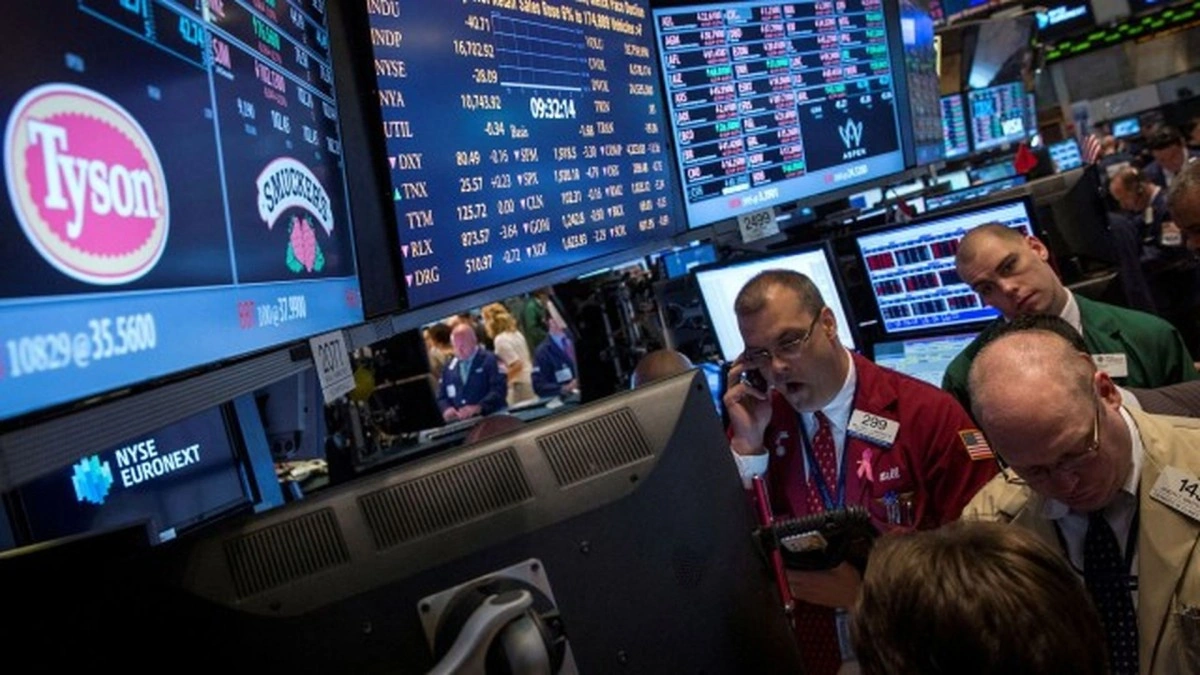
Here’s the thing about Wall Street: it’s a bit like a high-stakes poker game, full of bluffs, tells, and moments where everyone thinks they know the winning hand. But then, just when you’re settling into the rhythm of a winning streak, the table flips. That’s precisely what happened recently, as Wall St ends lower , leaving many scratching their heads. The once-unstoppable tech sector, the darling of many a portfolio, saw its epic tech rally stalls , and even the seemingly boundless enthusiasm for AI began to cool after some key earnings reports. Specifically, the much-anticipated Nvidia results seemed to be the catalyst that pushed the market off its high horse, leading to a palpable sense that AI fervor wanes .

But why? What’s really going on beneath the headlines? Is this just a blip, a healthy recalibration, or something more significant? As someone who’s watched these market dynamics play out countless times, what fascinates me isn’t just that the market dipped, but why it dipped now, and what those tremors could signal for the broader economic landscape. Let’s pull up a chair, grab a coffee, and really dig into the hidden context and implications of this latest market shift. This isn’t about panic; it’s about understanding, because in the world of investments, knowledge is your most powerful ally.
The Great Tech Engine Sputters | More Than Just Nvidia

While Nvidia often takes center stage when we talk about AI and semiconductor prowess, its recent performance, while still strong, didn’t quite live up to the sky-high expectations some had baked into their models. And let’s be honest, those expectations were bordering on the stratospheric. The market had been pricing in perfection, a flawless victory parade for every quarter. So, when even a stellar report has a minor wrinkle or a cautious outlook, it can trigger a domino effect across the entire technology sector performance .
I initially thought this was straightforward, a simple case of “buy the rumor, sell the news.” But then I realized, it’s bigger than one company, even one as influential as Nvidia. The entire megacap tech cohort, those titans that have driven so much of the market’s gains, felt the pinch. Think about it: Apple, Microsoft, Amazon, Alphabet – they’ve all been beneficiaries of the broader tech boom and the AI narrative. When the leading indicator, Nvidia, shows any sign of slowing growth or increased competition, it casts a shadow over the whole ecosystem. It makes investors reconsider whether the rapid growth rates we’ve seen are sustainable, or if the pace is simply too hot to handle indefinitely. This isn’t a judgment on these companies’ long-term prospects, mind you, but rather a reflection of the market’s often irrational short-term reactions.
Moreover, the sheer weight of these tech giants means their collective movement dictates the broader market’s direction. When their tech rally stalls , it’s almost inevitable that the wider indices like the S&P 500 and the Nasdaq follow suit. It’s a reminder that diversification, while sometimes boring, is your friend in these turbulent times. The concentration of wealth and market cap in a handful of tech stocks means their fortunes are inextricably linked to the overall market’s health.
Decoding the Waning AI Fervor | Is the Party Over, or Just Paused?
The term “AI fervor wanes” might sound dramatic, and perhaps a touch premature for such a transformative technology. But in the context of stock market cycles, it’s remarkably descriptive. We’ve seen an incredible surge in artificial intelligence stocks over the past year, fueled by the promise of generative AI and its potential to revolutionize industries. Companies that even hinted at AI integration saw their valuations skyrocket. This created a kind of speculative frenzy, where future potential was valued far above current profitability or even clear business models.
What we’re witnessing now is a natural cooling-off period. It’s not necessarily a rejection of AI’s long-term potential – far from it. Rather, it’s a re-evaluation of the immediate, tangible returns and the pace of adoption. Investor sentiment is a fickle beast, swinging between euphoria and apprehension. When the initial burst of excitement subsides, and the hard work of implementation, regulation, and competitive differentiation begins, the market starts to ask tougher questions. “How much will this actually contribute to the bottom line next quarter?” “Are these valuations justified by current earnings, or merely by future dreams?”
Let me rephrase that for clarity: the party isn’t necessarily “over” for AI, but the guest list might be getting a bit more discerning. Companies with strong fundamentals, clear roadmaps, and proven execution in the AI space will likely continue to thrive. But those that were riding the coattails of the hype, perhaps without substantial underlying technology or a viable business plan, might find the going tougher. This shift is a healthy one, bringing a much-needed dose of realism to a sector that has occasionally seemed untethered from traditional valuation metrics. It forces a stronger focus on actual innovation and competitive advantage, rather than just catchy buzzwords. It’s the market’s way of saying, “Okay, show me the money, not just the potential.”
Beneath the Surface | Macro Headwinds and Market Psychology
It would be too simplistic to blame this entire market dip on just tech and AI. There’s a deeper undercurrent at play, a confluence of macro factors that have been quietly shaping market volatility for months. The specter of inflation, though seemingly cooling, still lingers. And with it, the pervasive question surrounding Federal Reserve interest rates . Will they hold steady? Will they cut? And if so, when? These uncertainties create a hesitant environment for growth stocks, which are particularly sensitive to higher interest rates because their future earnings are discounted more heavily.
Moreover, global economic indicators present a mixed bag. While the U.S. economy has shown remarkable resilience, concerns about slowing growth in other major economies or geopolitical tensions can quickly dampen enthusiasm. For me, observing the interconnectedness of these factors is key. A slowdown in manufacturing abroad, a blip in consumer confidence at home, or an unexpected geopolitical event any of these can amplify existing market jitters. This isn’t just about data points; it’s about collective psychology, the ebb and flow of optimism and pessimism that drives buying and selling decisions. It’s what can turn a minor correction into something more significant, or vice-versa.
Is this a healthy stock market correction ? Many analysts would argue yes. Markets don’t go up in a straight line forever. Pullbacks are normal, even necessary, to shake out excess speculation and to allow prices to catch up with fundamentals. But the trick, always, is discerning whether it’s a temporary dip before the next leg up, or a warning sign of deeper structural issues. While no one has a crystal ball, what we can say is that the market is currently digesting a lot: high valuations, the pace of AI integration, and the persistent uncertainty around monetary policy. It’s a period of re-assessment, and historically, these periods can present opportunities for savvy investors who aren’t swayed by the daily swings. To understand these dynamics better, you might find it helpful to read more about the concept of astock market correctionon Wikipedia.
What This Means for Your Portfolio (And Your Coffee Shop Talk)
So, what’s the takeaway from all this, especially if you’re like me, someone who just wants to make sense of the noise and perhaps protect or grow their hard-earned money? Well, first, don’t panic. That’s always step one. Markets are cyclical, and pullbacks are as much a part of the landscape as rallies. The current dip, driven by a cooling in the tech and AI sectors, serves as a vital reminder that even the most compelling narratives, like AI’s boundless potential, can get ahead of themselves.
For your portfolio, this might mean a renewed focus on diversification beyond just megacap tech . It could be an opportune moment to look at sectors that haven’t seen the same speculative highs or to re-evaluate your risk tolerance. The resilience of the broader market, despite the tech slowdown, will be keenly watched. It’s a good time to check in with your financial goals, not to make knee-jerk reactions. As my grandpa used to say, “The market is a device for transferring money from the impatient to the patient.”
And for your coffee shop conversations? Well, now you’ve got some genuinely insightful talking points beyond just “Did you see the market today?” You can explain why Nvidia’s results had such an outsized Nvidia stock impact , or delve into the nuances of why AI fervor wanes without dismissing the technology itself. You can talk about how Federal Reserve interest rates are still pulling strings behind the scenes, even if everyone’s focused on the latest tech earnings. Understanding these dynamics makes you a smarter investor and, frankly, a more interesting person at brunch. Remember, market shifts aren’t just about numbers; they’re about human behavior, economic forces, and the endless quest to price the future.
Frequently Asked Questions About the Current Market Downturn
Is this a bear market or just a correction?
While Wall St ends lower , signaling a downturn, the recent events are more accurately described as a stock market correction , especially for the technology sector. A bear market typically implies a sustained decline of 20% or more from recent highs across broad market indices. We haven’t reached that threshold broadly, though individual sectors likespecific tech segmentsmight feel more pain.
Should I sell my AI stocks now that AI fervor wanes?
Not necessarily. Knee-jerk reactions often lead to regret. The cooling of AI fervor wanes signifies a maturation, not necessarily an end. Evaluate your individual holdings based on their fundamentals, long-term prospects, and your personal financial goals. For many, a long-term perspective on quality artificial intelligence stocks could still yield positive returns.
How do Federal Reserve interest rates affect tech stocks?
Higher Federal Reserve interest rates generally make it more expensive for companies to borrow money for expansion, which can particularly impact growth-oriented tech companies. Additionally, future earnings of growth stocks are discounted more heavily in a higher interest rate environment, making their present valuations less attractive. This can contribute to a tech rally stalls scenario.
What does “megacap tech” mean?
Megacap tech refers to technology companies with extremely large market capitalizations, typically over $200 billion or more. These are the giants like Apple, Microsoft, Amazon, Google (Alphabet), and Nvidia, which often have a disproportionate influence on overall technology sector performance and the broader market due to their size and weight in indices.
How can I protect my portfolio from market volatility?
Protecting your portfolio from market volatility involves strategies like diversification across different asset classes and sectors, dollar-cost averaging (investing a fixed amount regularly), and maintaining a long-term perspective. Avoiding emotional decisions based on daily news is crucial. Consider reviewing your asset allocation to ensure it aligns with your risk tolerance and financial objectives.
Where can I find reliable news and analysis on these market trends?
For reliable news and analysis, always stick to reputable financial news outlets. You might also find valuable insights on broader economic trends impacting housing and finance, such as those discussed onGroow Finance News, which provides detailed economic reports.


